
Legaltech for real‑world language
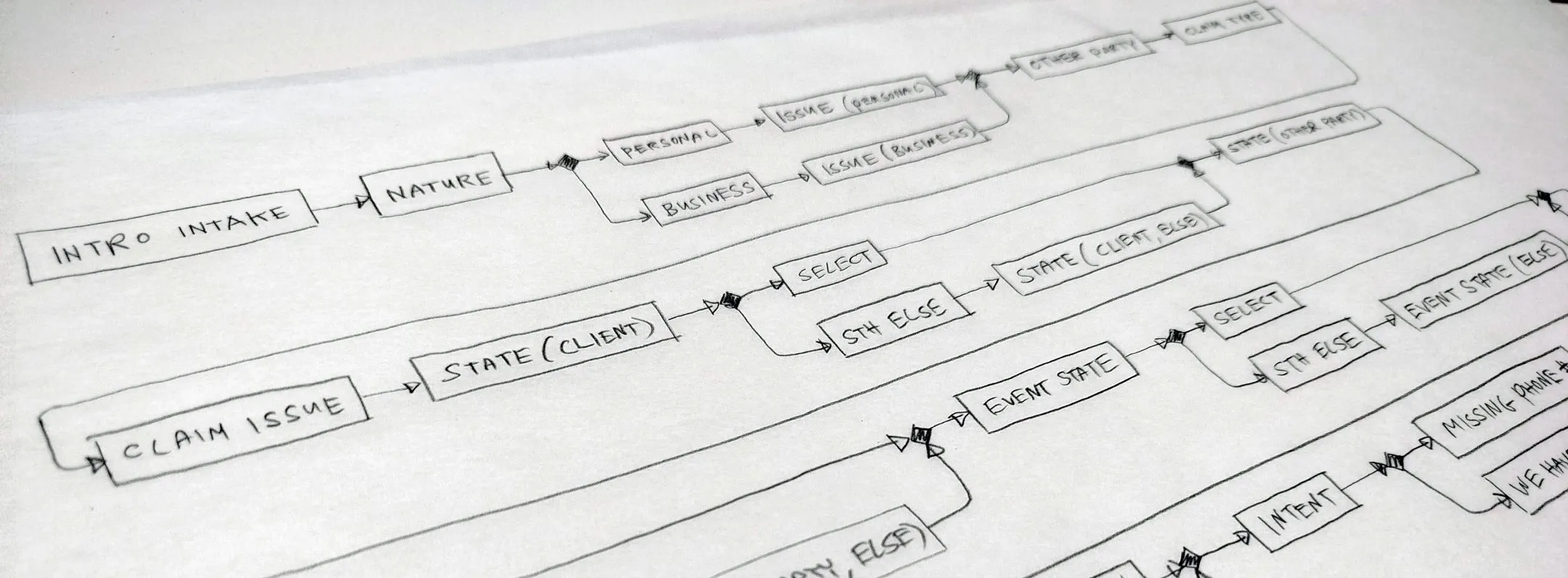
In early legal service consultations, clients often felt anxious while seeking validation for their claims. Analyzing initial user consultations revealed key behavioral patterns in how legal professionals build rapport and gather case context
My goal was to transform a static intake process into a dynamic, highly empathetic experience that mirrored a real dialogue with an attorney
Finding clarityat the CS desk
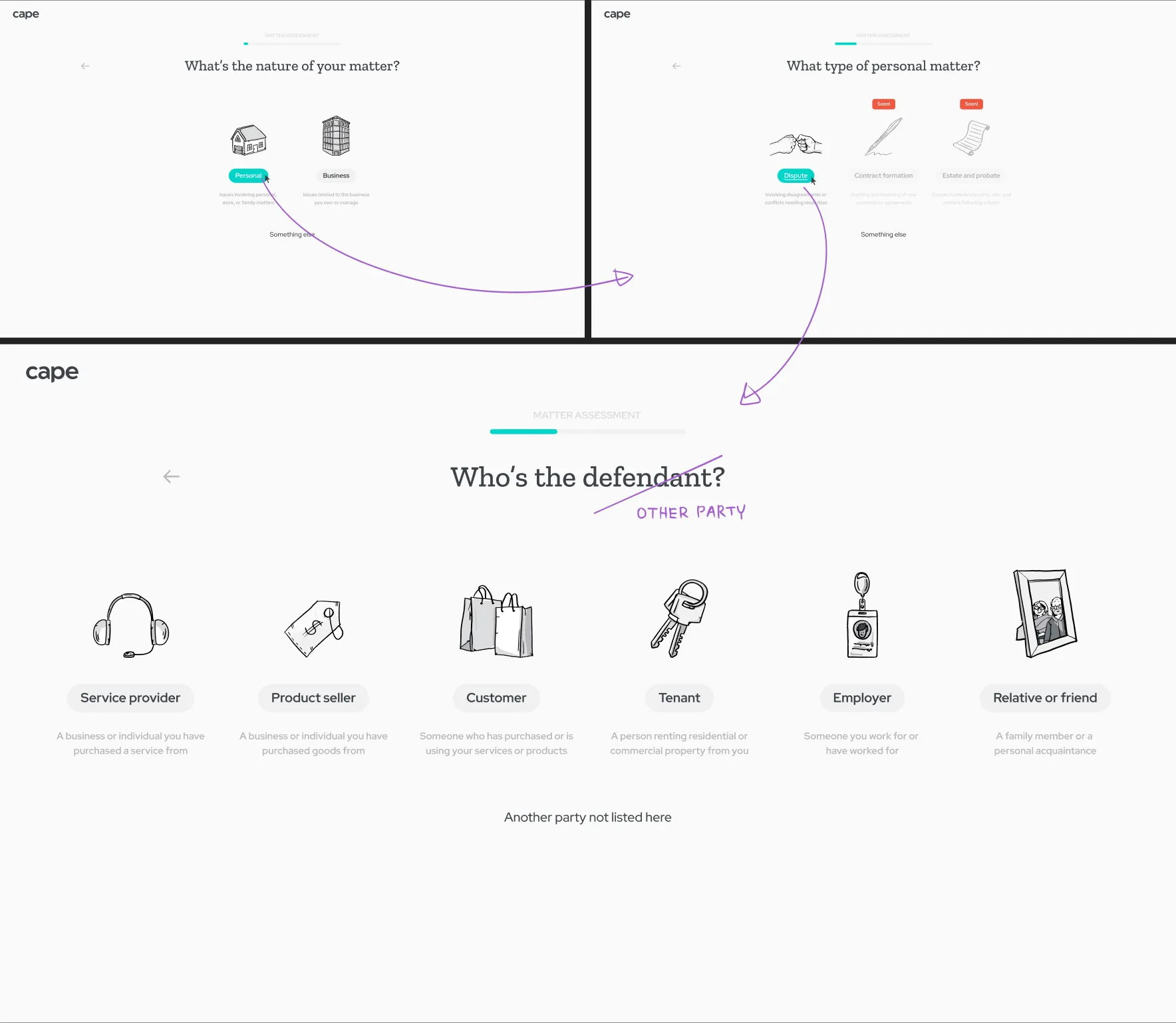
When our global Customer Support team visited our local office, one team member shared a surprising insight: clients frequently misunderstood the term “Defendant,” often believing it referred to themselves as they defended their rights
We agreed that “Other party” provided a much clearer alternative. I updated the intake copy accordingly, and we aligned with CS to adopt this terminology across all customer interactions
Embracing human
echoes for trust
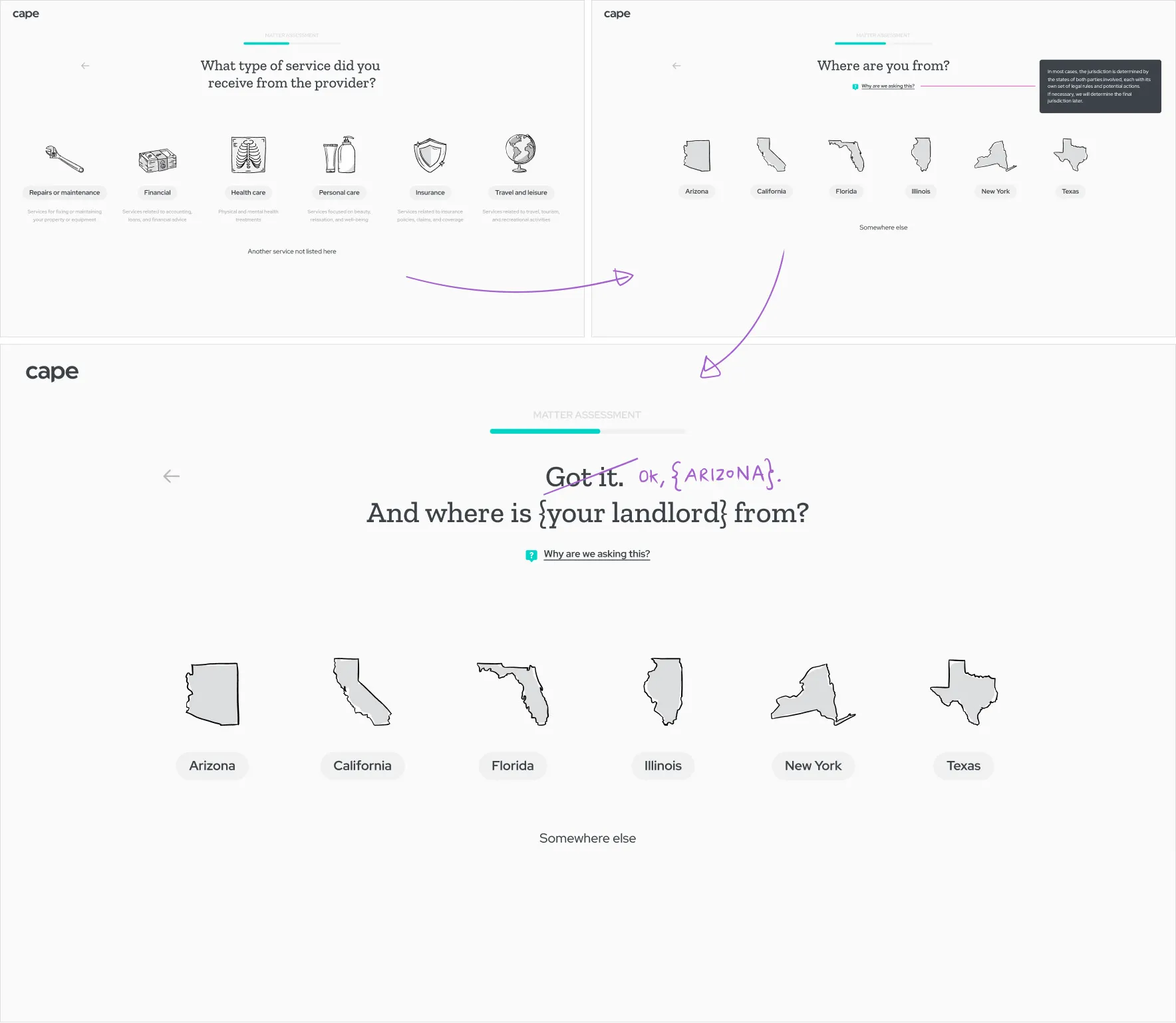
By analyzing consultation calls, I identified a distinct behavioral pattern: attorneys naturally echoed the client’s last entry before proceeding, creating a brief pause that validated the information
To recreate this human rhythm in the digital flow, I replaced generic confirmation copy like “Got it” with contextual responses such as “OK, Arizona,” making the intake feel like an active, empathetic dialogue
Results
Humanizing the intake experience and standardizing terminology directly boosted funnel completion rates, reduced support inquiries by eliminating client confusion, and equipped attorneys with upfront context to significantly shorten case evaluation time